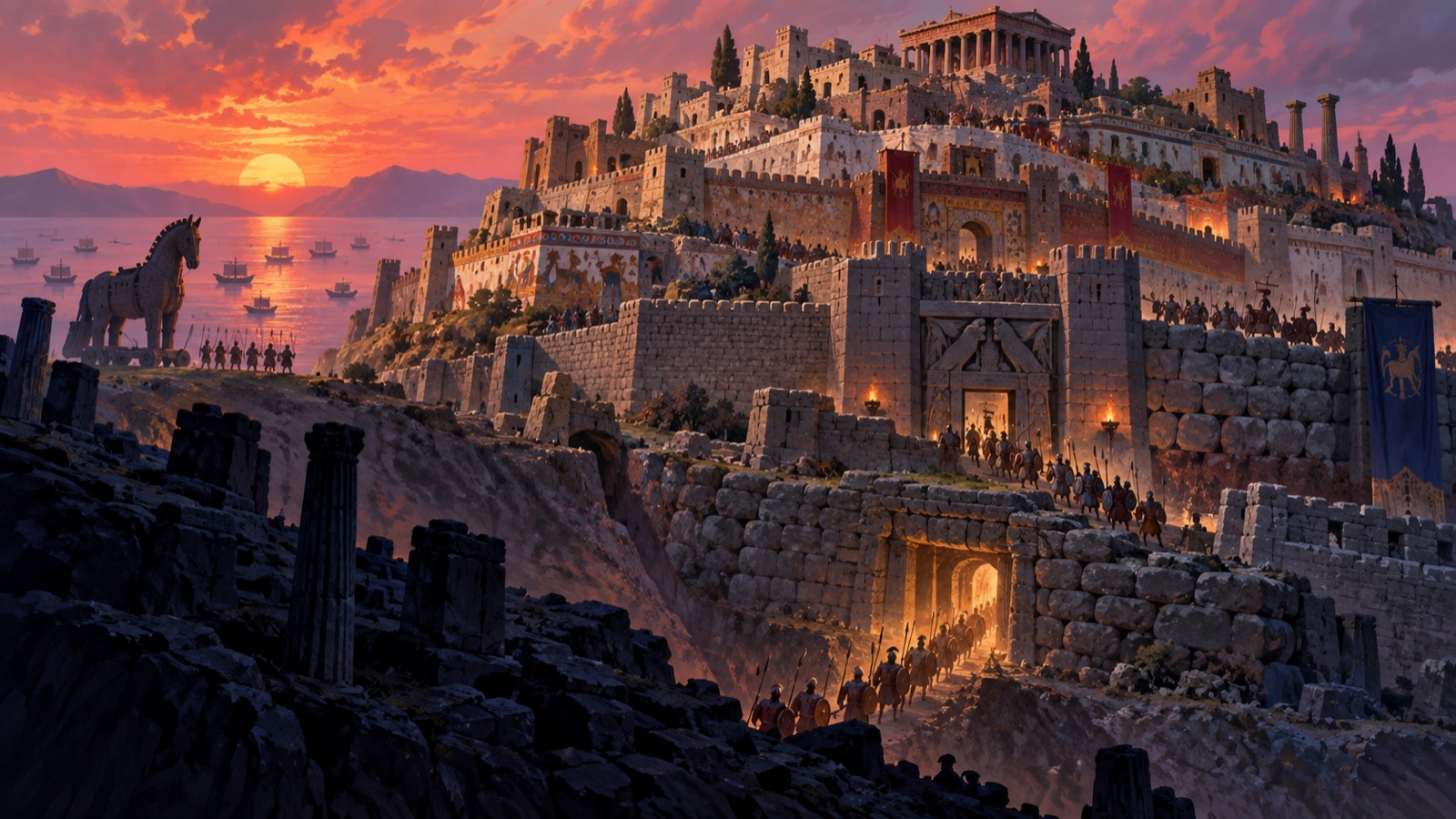
Inspired by The many settlement layers at Troy and the later literary tradition of the Trojan War
Nine Cities at War
Every layer beneath the famous ruins remembers a different siege.
What the party believes
The characters join a sunset tour at Troy after a scholar reports a doorway beneath the public path. Their guide introduces himself as Priam and dismisses the wooden horse as a later story. When the site closes, streets from several ruined cities appear across the same hill.
Priam leads the party through each layer without hesitation. Soldiers in different armor call him king. A wooden souvenir bought by another visitor grows heavier with every gate they pass, and names appear inside it that were carved centuries after the famous war.
Return to the present layer of Troy and stop the buried cities from beginning their wars again.
Where the trail leads
- Cross a market where each doorway opens into a different century of the city.
- Negotiate with gate captains who remember different enemies and different reasons for the siege.
- Open the wooden horse and find records proving it was built long after the earliest destruction.
- Discover that Priam has been steering every layer toward the same lower gate.
- Reach the first city's council chamber as Priam claims all nine Troys and calls their armies to him.
What actually happened
The wooden horse never entered Troy. Later rulers spread that story because foreign trickery was easier to accept than the truth. The first city opened its own gate during a revolt against an immortal royal line.
Priam preserved the false story because it made every later Troy see his dynasty as the innocent victim. He intends to merge the nine cities and rule them as proof that his bloodline never truly fell. The party must expose the first revolt or fight nine versions of his army at once.
Where it can end
- Defeat Priam and let each buried city return to its own time.
- Reveal the founding revolt and unite the layers against the immortal dynasty.
- Choose one Troy to remain, carrying the histories of the other eight back to the surface.
The history behind the story
The archaeological mound at Hisarlik preserves a long sequence of settlements and evidence of contact among Anatolia, the Aegean, and the Balkans. Homer's Iliad gave the Trojan War its lasting literary form. The simultaneous cities and invented origin of the wooden stratagem are fantasy.
Content notes
siege warfare, civil conflict, displacement. Change or fade any element that does not suit your table.